
Call quality stood out in my hands-on review. Whether the Pro Max is worth the extra money depends on how much you’ll use its touchscreen and recorder.
The best thing about the Soundcore Liberty 5 Pro Max was how clearly they handled calls. The touchscreen case is what sets the Max apart from the regular Liberty 5 Pro. It can record an in-person meeting and sync the audio to your phone later, but it adds to the price and the earbuds run for less time when all the smart features are on.
What the touchscreen case does
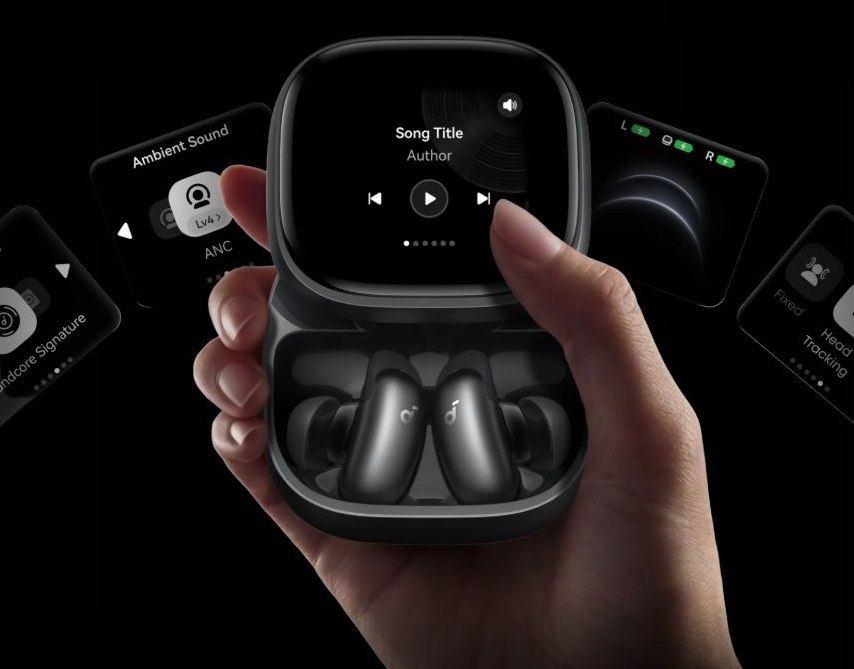
The first thing you notice is the charging case. Instead of the usual small status light, Anker has built in a 1.78-inch AMOLED touchscreen that lets you adjust settings, access the AI recorder and control features without constantly reaching for your phone.
I particularly like the customization. In the Soundcore app you can change the wallpaper on the case, including using compatible Live Photos from an iPhone to create a personal, looping background. It’s a fun touch, but it also makes the product feel more personal.
More importantly, the screen gives quick access to practical features such as noise cancellation and audio controls. It’s a useful distinction between the Pro Max and less expensive earbuds with conventional cases.
Call quality is the standout feature
If you spend a lot of time on calls from airports, city streets or busy offices, this may be the biggest reason to consider the Liberty 5 Pro Max. Each earbud uses Anker’s Thus AI chip, while the calling system combines eight microphones and two voice pickup units, with additional sensing to help distinguish speech from surrounding noise.
Anker says the system can keep a caller’s voice intelligible in environments exceeding 100 decibels. That’s a manufacturer claim, rather than a test I independently replicated at that exact volume, but I came away genuinely impressed by the clarity of the calling features.
There’s also a clever whisper-calling mode. If you need to speak quietly while discussing something sensitive, the system can pick up your softer voice and make it easier for the person on the other end to hear you. That combination of loud-environment noise suppression and quiet-voice pickup is unusual.
Anker has a strong credential here: the related Liberty 5 Pro earned an April 2026 Guinness World Records certification for the highest objective TWS earbud speech-quality score. The Liberty 5 Pro Max uses the same earbud units and, according to Anker, delivers the same calling performance. That distinction matters: it’s the Pro that received the certification, not a separate record award for the Max.
AI note-taking without carrying your phone into the meeting
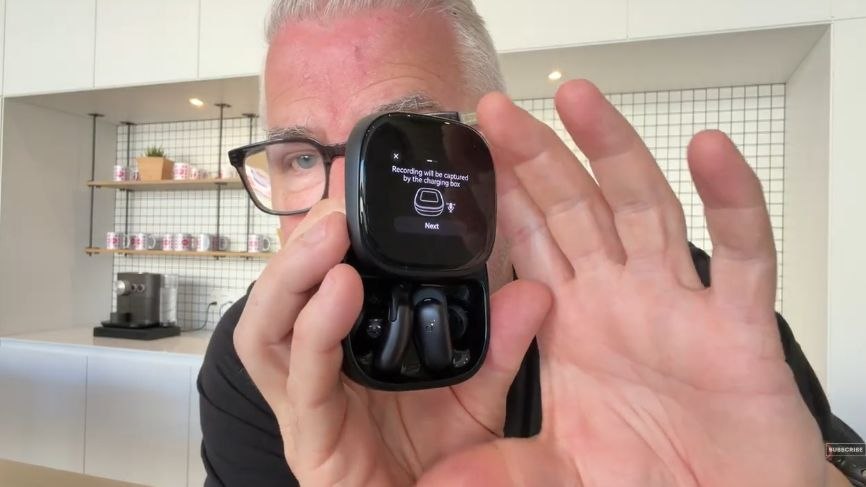
Another feature that caught my attention is the AI Note-Taker built into the case. It can record audio from an in-person meeting or lecture using the case’s microphone even when your phone isn’t beside you. Once you reconnect to the app, the recording can be processed into a transcription, summary and action items.
That opens up some useful possibilities for students, executives and journalists who want to concentrate on a discussion rather than spend the entire time writing notes. In my video, I highlighted the convenience of being able to record a meeting with the case itself and sync it afterward.
There are limits worth understanding before you buy. Anker says the case records in-room, in-person sound; it is not designed to directly capture phone calls, video calls or online meetings. The current US product information also describes a free Starter allowance of 120 AI-transcription minutes per month for 24 months, with paid tiers for heavier usage. Availability, pricing and allowances should be checked for Canada before relying on the feature as part of your workflow.
And, as with any recording product, get the appropriate consent from participants and follow applicable recording and privacy rules.
Music and noise cancellation
While I’m particularly enthusiastic about the calling and productivity features, these are still premium wireless earbuds, and the music side does not feel neglected. They use 9.2mm wool-paper diaphragm drivers, support LDAC on compatible devices and include audio tuning through HearID 5.0 and the Soundcore app.
HearID can help create a personalized equalizer profile rather than forcing everyone to use a one-size-fits-all sound. There’s also AI sound enhancement and Dolby Atmos-optimized spatial audio features. I found the overall music experience very capable, although sound preferences are personal and I’d encourage experimenting with the EQ settings.
Adaptive ANC 4.0 uses multiple sensors and on-device processing to respond to ambient noise. Anker claims significantly improved cancellation over its previous flagship. Actual performance will depend on ear-tip fit, environment and listening settings, so I would treat that comparison as Anker’s lab claim rather than a universal result.

Offline voice commands and everyday conveniences
Here’s another clever advantage of the Thus AI chip: supported controls can run locally, rather than waiting for a cloud assistant. Anker specifies 20 built-in voice commands for actions such as skipping tracks, changing volume and handling calls. In practice, the idea is faster responses without needing an active internet connection for those basic controls.
There’s also Bluetooth 6.1, three-device multipoint connectivity, IP55 dust and water resistance, wireless charging and multiple sizes of ear tips and stabilizing fins. At roughly 5.5 grams per earbud, they are relatively compact for the technology packed inside.
What about battery life?
Battery life depends heavily on which features you leave running. Anker rates the Liberty 5 Pro Max for approximately 6.5 hours of listening with active noise cancellation on, or up to 28 hours including the charging case. With ANC, Dolby audio and smart voice features all enabled, the company quotes closer to four hours per charge and 17 hours with the case.
One handy feature is rapid charging: in standard listening conditions, Anker says a five-minute charge can provide up to four hours of playback. As always, expect real-world runtime to change with volume, codec, settings and usage.
Liberty 5 Pro or Liberty 5 Pro Max?
These two models share the important earbud hardware, including the call-quality technology. The main reason to pay more for the Pro Max is the larger AMOLED touchscreen case and its dedicated meeting-recording and AI note-taking functions. If you simply want excellent calls, active noise cancellation and music playback, the regular Liberty 5 Pro may be the smarter value. But if the case-based productivity features fit your routine, the Max has a more compelling reason to exist.
Price and availability in Canada
At the time of writing, Anker Canada lists the Soundcore Liberty 5 Pro Max at CA$319.99, although discounts and retailer pricing can change. See Anker’s Canadian product page for the latest official details.
My verdict
I’d buy the Pro Max if I regularly needed to record in-person meetings and wanted the recorder in the charging case. The touchscreen was handy for changing settings, but call clarity was the feature I’d use most. If that’s your priority too, the regular Liberty 5 Pro uses the same earbud hardware and costs less.
Watch my Soundcore Liberty 5 Pro Max hands-on review
Soundcore Liberty 5 Pro Max specifications
| Feature | Specification |
|---|---|
| Drivers | 9.2mm wool-paper diaphragm |
| Bluetooth | 6.1, up to three devices |
| Audio formats | SBC, AAC, LDAC |
| ANC | Adaptive ANC 4.0 |
| Calls | Eight microphones, two voice pickup units, Thus AI chip |
| Smart case | 1.78-inch AMOLED touchscreen and AI audio recorder |
| Playback with ANC | Up to 6.5 hours; 28 hours with charging case |
| All smart features active | About four hours; 17 hours with case (manufacturer rating) |
| Fast charging | Up to four hours from a five-minute charge (standard mode) |
| Durability | IP55 |
| Weight | Approximately 5.5g per earbud |
| Canadian list price | CA$319.99 (subject to change) |
Reporting sources: Anker Canada product page and official Soundcore product specifications and FAQ. Images are from the GetConnected video review and Anker Soundcore.