

November 13, 2026 • By Mike Agerbo
Five tech stories I’m following this week — from Google’s new AI glasses and Canada’s AI-safety commitments to European app rules, wearable privacy and hacking risks for connected devices.
Jump to a story
- 1. Google’s Gemini-powered glasses go on preorder — but not in Canada yet
- 2. Canada signs an international AI safety declaration — without binding rules
- 3. Europe proposes rules for addictive app design and subscription traps
- 4. Muse brainwave data and AI training raise a consent question
- 5. Attacks on connected refrigerators show the risk of aging smart equipment
1. Google’s Gemini-powered glasses go on preorder — but not in Canada yet
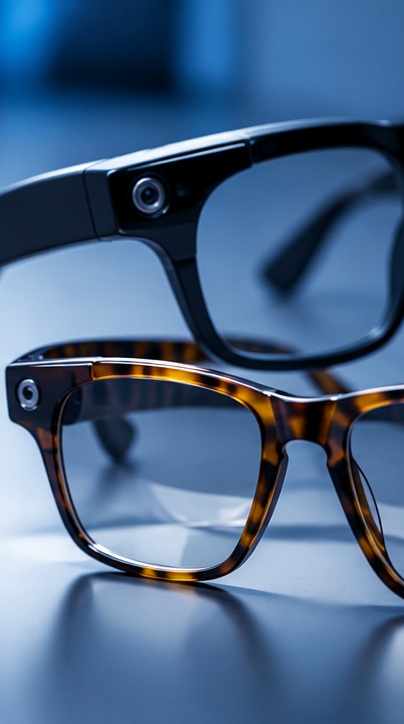
Google is turning the smart-glasses concept into a more concrete product category. On November 12, it opened preorders for Intelligent Eyewear developed with partners including Warby Parker, Gentle Monster and Samsung. Rather than requiring you to pull out a phone for every question, the glasses put Gemini assistance into frames designed for everyday use. Google says customers can ask questions, receive spoken information, navigate, translate languages and capture photographs hands-free.
The two fashion partners are approaching the product from different directions. Warby Parker offers three frames—Alden, Reid and Wren—with optical and sun variants starting at US$395. Gentle Monster is aiming for a more expressive look with six designs starting at US$449. Google also lists a 12-megapixel camera and up to nine hours of battery life, although actual results depend on usage. The planned retail launch is December 10, following the preorder period.
The most important caveat for Canadian shoppers is not the price; it’s compatibility and regional support. Google’s announcement explicitly limits use to eligible Google accounts from the United States and South Korea, and no Canadian launch has been confirmed. The glasses also have specific supported-phone and adult-account requirements. Anyone considering a cross-border purchase should verify those conditions before spending money. Quoted prices are in U.S. dollars, not Canadian dollars.
Privacy deserves equal attention. Google says users control camera and microphone permissions, can review or delete Gemini conversations, and get an indicator light when photos or videos are being captured. It also says the glasses stop recording if that light is covered or disabled, and there’s a full power-off switch. Those safeguards are useful, but they don’t eliminate the broader social question: how comfortable are the people around you with cameras in ordinary-looking eyewear?
Mike’s Take: The interesting shift isn’t just putting AI in glasses; it’s making the assistant available without the constant screen-checking that defines smartphone use. For Canadians, though, the sensible move is to watch the rollout and support details rather than assume an imported pair will work fully at home. Google’s early software reliability and its approach to bystander privacy will matter as much as the hardware.
Source: Read the original reporting
2. Canada signs an international AI safety declaration — without binding rules

Canada joined an international declaration on AI safety and security on November 9, alongside Bahrain, Finland, France, Norway and the Netherlands. Major AI organizations and companies also signed, including Anthropic, Cohere, Microsoft, Mistral AI, OpenAI and others. The joint declaration recognizes that increasingly powerful AI systems cross national boundaries: a model developed in one country may be deployed in hundreds of services elsewhere.
The signatories identified several areas for cooperation. They called for clearer regulatory frameworks, practical transparency, serious-incident reporting, risk management and rigorous evaluation standards. The text also addresses testing, the removal or circumvention of model safeguards, internal oversight and the need to share information about developing problems. In particular, it encourages early-warning channels for potentially serious AI and cybersecurity incidents.
That could have real consequences for Canadians. A serious model failure could affect cloud software used by hospitals, schools, businesses and government services at the same time. Coordinated reporting would help developers and public authorities compare warning signs rather than treating each failure as an isolated incident. It might also encourage companies to explain more clearly what testing was done before a powerful system was released.
But the important distinction is between a statement of intent and enforceable protection. This is a voluntary declaration, not a new Canadian law. Signing it does not immediately impose penalties on an AI supplier that fails to meet every aspiration. Measuring progress will mean looking for specific reporting mechanisms, independent evaluation, timely disclosure and rules that consumers can understand.
Mike’s Take: International cooperation is a sensible starting point because AI platforms don’t stop at the border. What I’ll be watching is whether these commitments evolve into procedures that make failures visible and help users evaluate the systems they rely on. Trust is earned through evidence and accountability, not merely through a list of signatures.
Source: Read the original reporting
3. Europe proposes rules for addictive app design and subscription traps
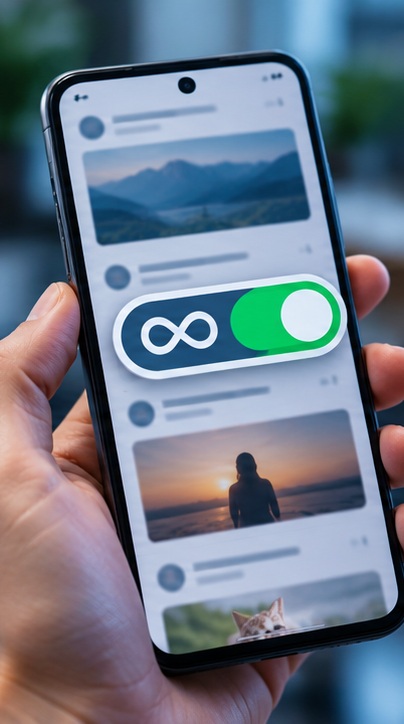
The European Commission proposed a Digital Fairness Act on November 11, putting some familiar online irritations under a legislative microscope. The proposal targets manipulative interface choices—often called dark patterns—alongside addictive design, unclear or changing prices, exploitative personalization and obstacles that make online contracts unusually difficult to cancel.
Think about a free trial that quietly converts into a paid subscription, a cancellation path buried several menus deep, or a shopping screen that nudges you toward a more expensive choice. The Commission’s proposal also calls attention to automatic renewals, some influencer practices, digital products engineered to encourage overspending, and situations where customers cannot reach a human representative for support. It addresses both how an offer is presented and how easy it is to leave once you’ve signed up.
For Canadian consumers, there is an obvious appeal. Whether it’s a fitness app, streaming subscription or online store, the same frustrations show up here. However, this is European legislation in proposal form, not a change to Canadian law. Its wording may change as European institutions negotiate it, and Canadians do not gain new statutory rights from it just because they use the same global apps.
Still, the potential ripple effect is worth watching. Large platforms sometimes standardize product interfaces across countries, especially when a major market demands different terms or more transparent controls. Companies could eventually find it easier to adopt clearer cancellation and consent flows everywhere than to maintain entirely separate systems. That is a possibility, not a guaranteed result.
Mike’s Take: Good technology should help people make informed choices instead of wearing them down until they click Agree. The best consumer test is straightforward: Is the real price clear? Are the default options understandable? Can you cancel as easily as you subscribed? These are questions Canadians can ask right now, regardless of what happens in Brussels.
Source: Read the original reporting
4. Muse brainwave data and AI training raise a consent question
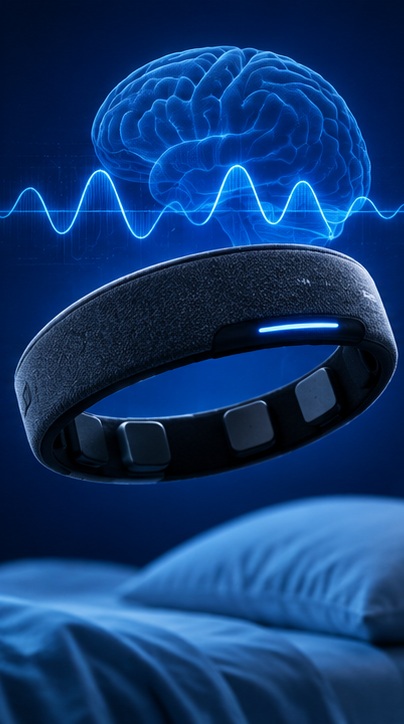
Privacy conversations around wearables usually focus on heart rate, sleep patterns, fitness and location. But brain-sensing headbands introduce another category of information: electroencephalography, or EEG, recordings. EEG captures patterns of electrical activity associated with the brain. Consumer devices use relatively few sensors, and their readings are not the same as a clinical neurological assessment or a device that can read your thoughts.
A November investigation reported by Science and summarized by Tom’s Hardware examined how neurotechnology companies use recorded EEG data to develop foundation models for AI research. It included Canadian company Interaxon, maker of the Muse meditation and sleep headband. According to that reporting, Interaxon trained an AI model using approximately 50,000 hours of EEG recordings after removing identifying details such as names and email addresses.
The concern is not that all research with anonymized data is inherently inappropriate. Combining many recordings can help researchers find patterns, develop better signal-processing techniques and potentially improve future tools. The concern is whether the original users understood that their measurements could be reused to train models, rather than only to deliver the sleep or meditation features they purchased.
The reporting says Interaxon updated its privacy policy after questions from investigators. A company representative acknowledged that users should be explicitly informed. The story therefore raises an important distinction between a policy that technically permits a use and communication that makes that use genuinely clear to consumers. De-identification reduces risk, but sensitive biological data still deserves careful stewardship.
Mike’s Take: Canadian wearable buyers should look beyond the marketing claims about better sleep or sharper focus. Before turning on cloud syncing or research-sharing features, read how recordings may be stored, shared and used to train future systems. Look for opt-out or deletion controls and ask the manufacturer when the policy changed. This is about informed permission, not assuming every use of EEG data is harmful.
Source: Read the original reporting
5. Attacks on connected refrigerators show the risk of aging smart equipment

Internet-connected equipment is now routine far beyond smart speakers and doorbells. Shops, restaurants and warehouses often rely on refrigeration, building controls, security cameras and monitoring systems that can be managed remotely. That convenience can also create an unexpected opening for attackers. The Guardian’s November 8 reporting described a string of incidents involving remotely connected refrigeration units at food businesses in Europe.
In one account, a London fruit-and-vegetable wholesaler noticed refrigerators behaving abnormally, with defrost indicators and temperatures rising. He disconnected the equipment from the internet after suspecting an attack. Similar problems were reported at retailers across several European countries. The direct impact of a refrigeration failure is easy to understand: wasted stock, potential food-safety risks and costly interruptions to a business.
The broader story is about how ordinary operational technology can become a digital target. An internet-connected controller may run for years with old software, shared credentials or remote-access settings that nobody revisits after installation. When systems are difficult to patch or replace, the gap between their useful physical life and their supported digital life can become a security problem.
These reported incidents should not be automatically described as AI-powered attacks. Cybercriminals can cause serious damage by exploiting weak passwords, vulnerable remote access or poorly secured control systems without any sophisticated AI capability. The lesson is to address basic security hygiene rather than assuming every modern intrusion requires a new type of artificial intelligence.
Mike’s Take: Canadians should treat smart appliances and building systems more like computers. Change factory-default credentials, enable multi-factor authentication where available, apply firmware updates, restrict remote access and separate less-trusted connected devices from sensitive business or home networks. If a product no longer receives security fixes, factor that into replacement planning. Convenience is useful only when the equipment remains dependable.
Source: Read the original reporting
Which tech story should I cover next? Join the conversation on GetConnected’s Instagram Stories.